Launch offer — valid today only

📄 Digital book in PDF · read it on your phone or print it

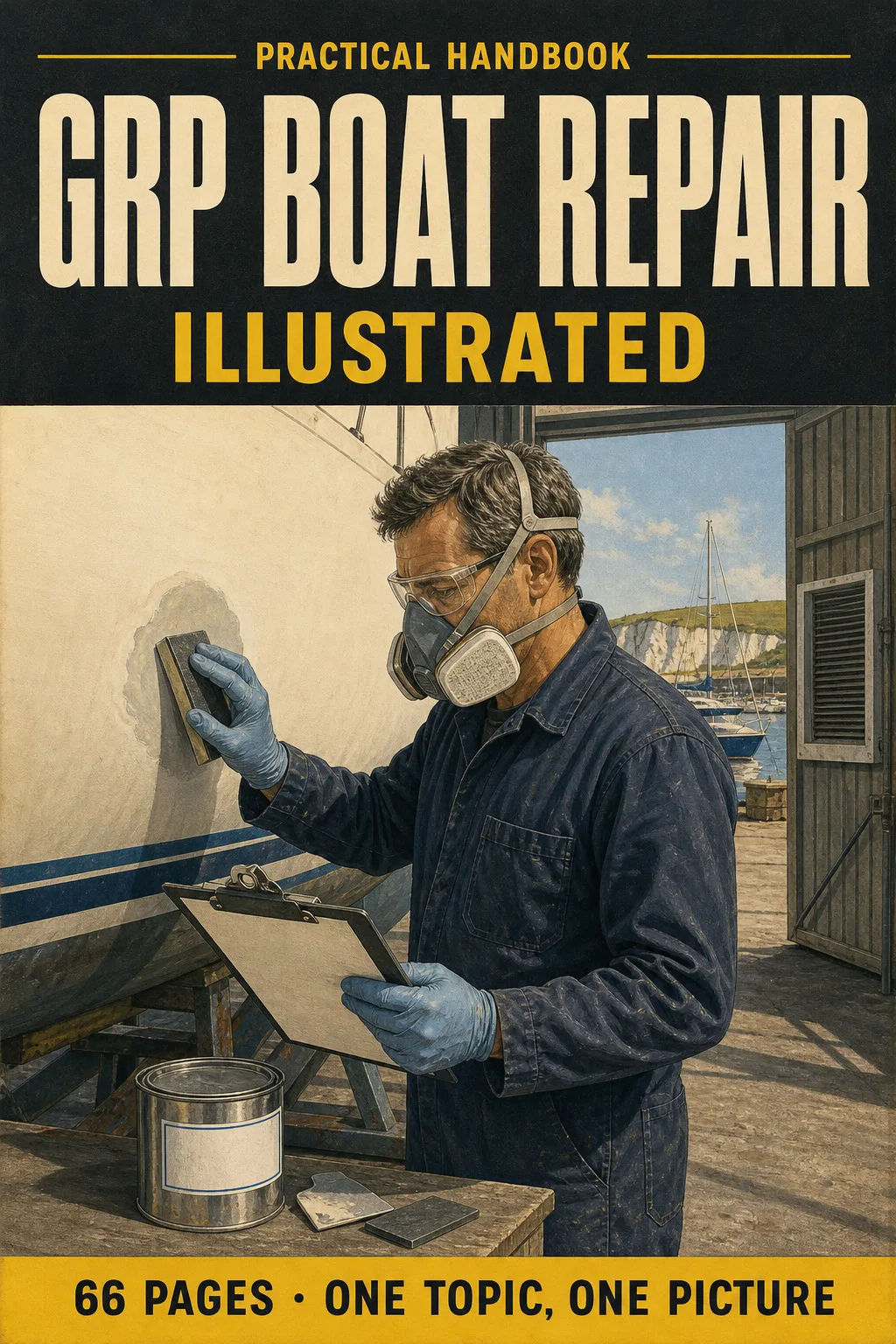
Fibreglass Boat Repairs, from Gelcoat to Osmosis, in Drawings One Repair on Every Page

Hull layers, resin mixing, gelcoat chips and star cracks, scarfing, wet cores, osmosis blisters and fairing. Each topic has its own page: first the drawing, then what you need to remember, and when it's a job for the yard. 66 illustrated pages.

SEE INSIDE THE BOOK

🔒 Secure checkout · PDF by email · 30-day guarantee

Every topic, its own pageEach repair drawn, with the explanation alongside
66 illustrated pages9 parts, from your hull in cross-section to the pre-relaunch hull check
Up-to-date sourcesHSE COSHH guidance and each product's technical and safety data sheets
PDF by emailFormat

Look Inside the Book

Every page has one big drawing and a box with the layers, figures and steps you need to know:

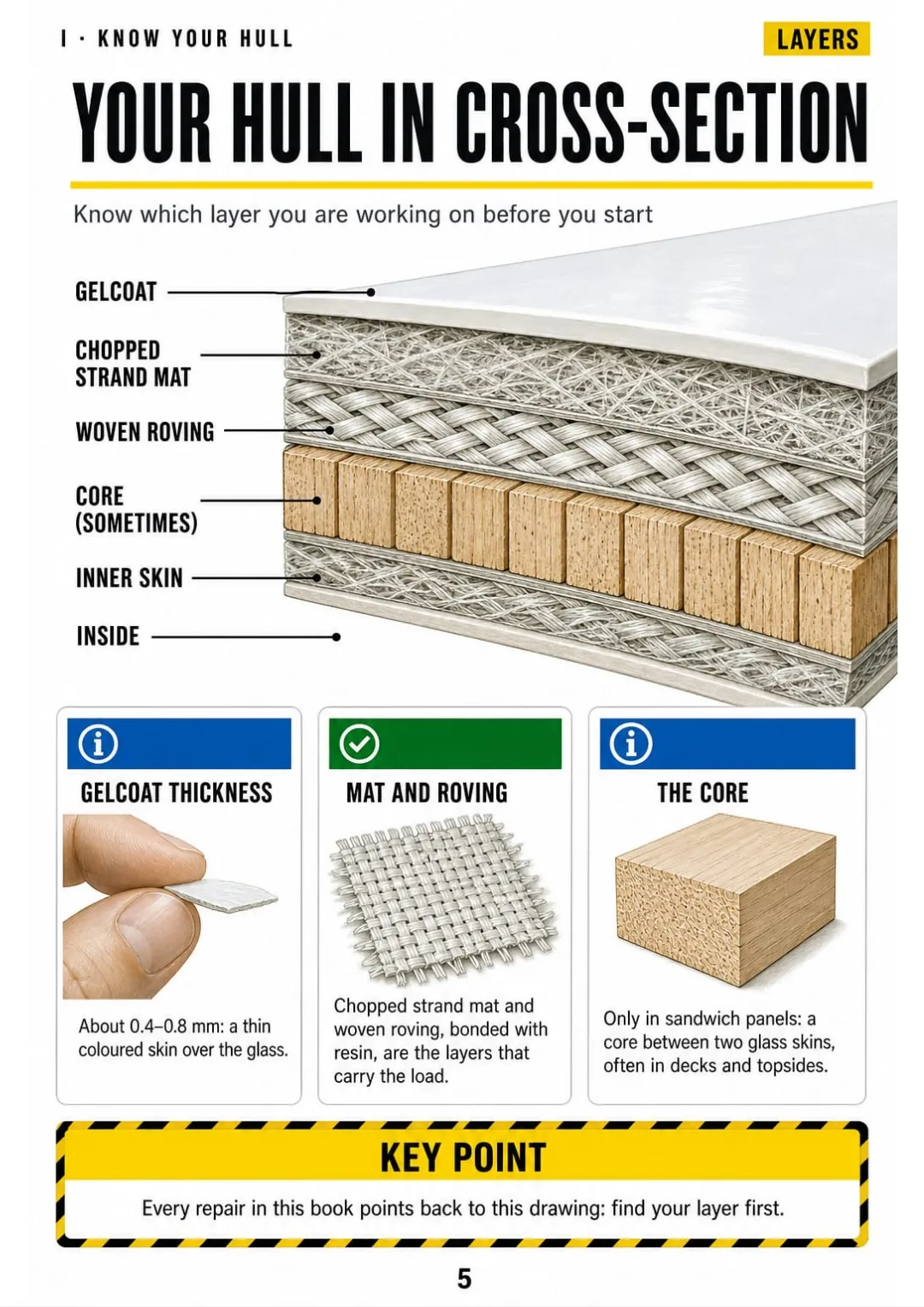
Gelcoat about 0.4–0.8 mm, then mat, roving and sometimes a core: every repair starts here.
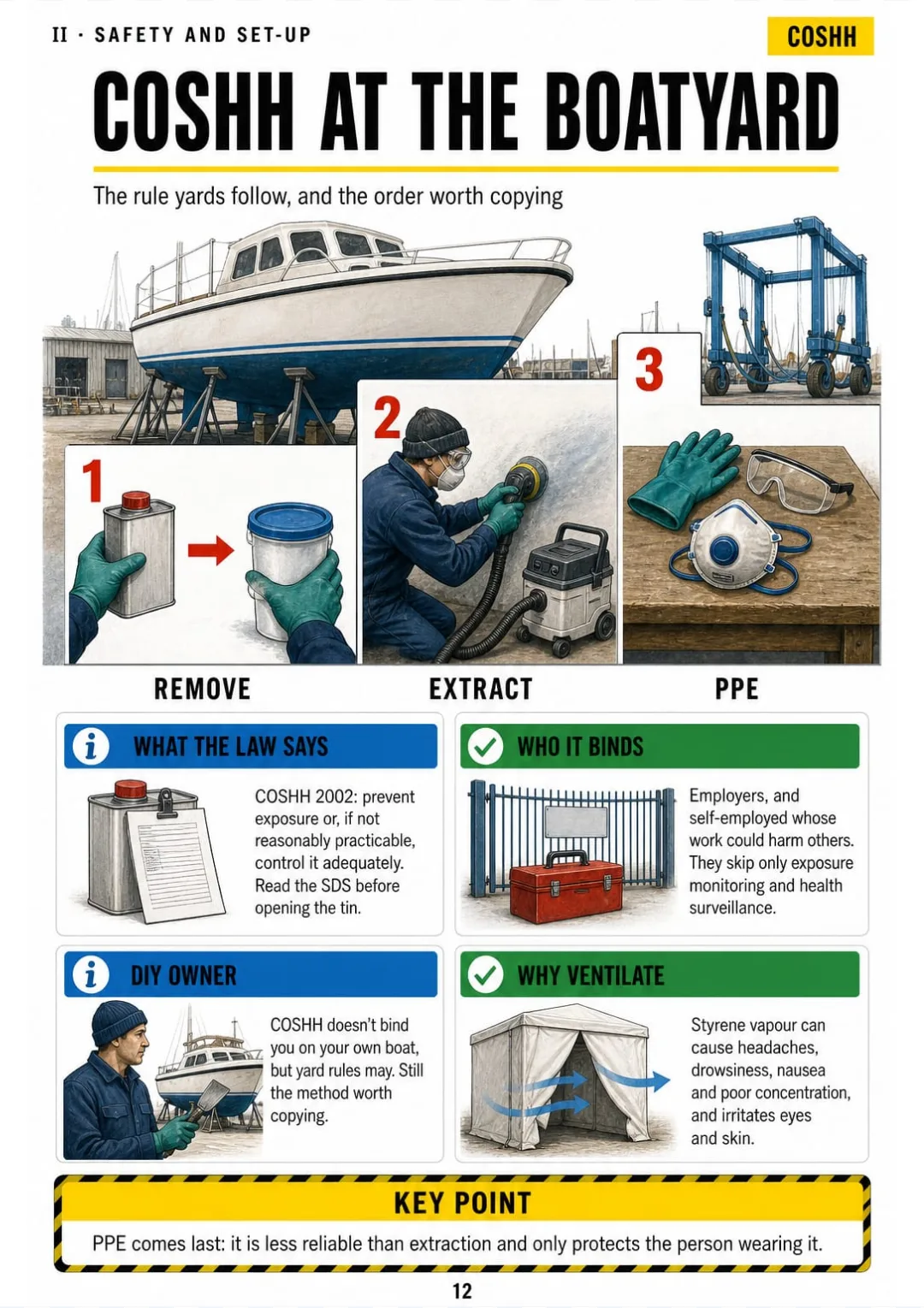
COSHH order of control: remove the hazard, extract at source, PPE last
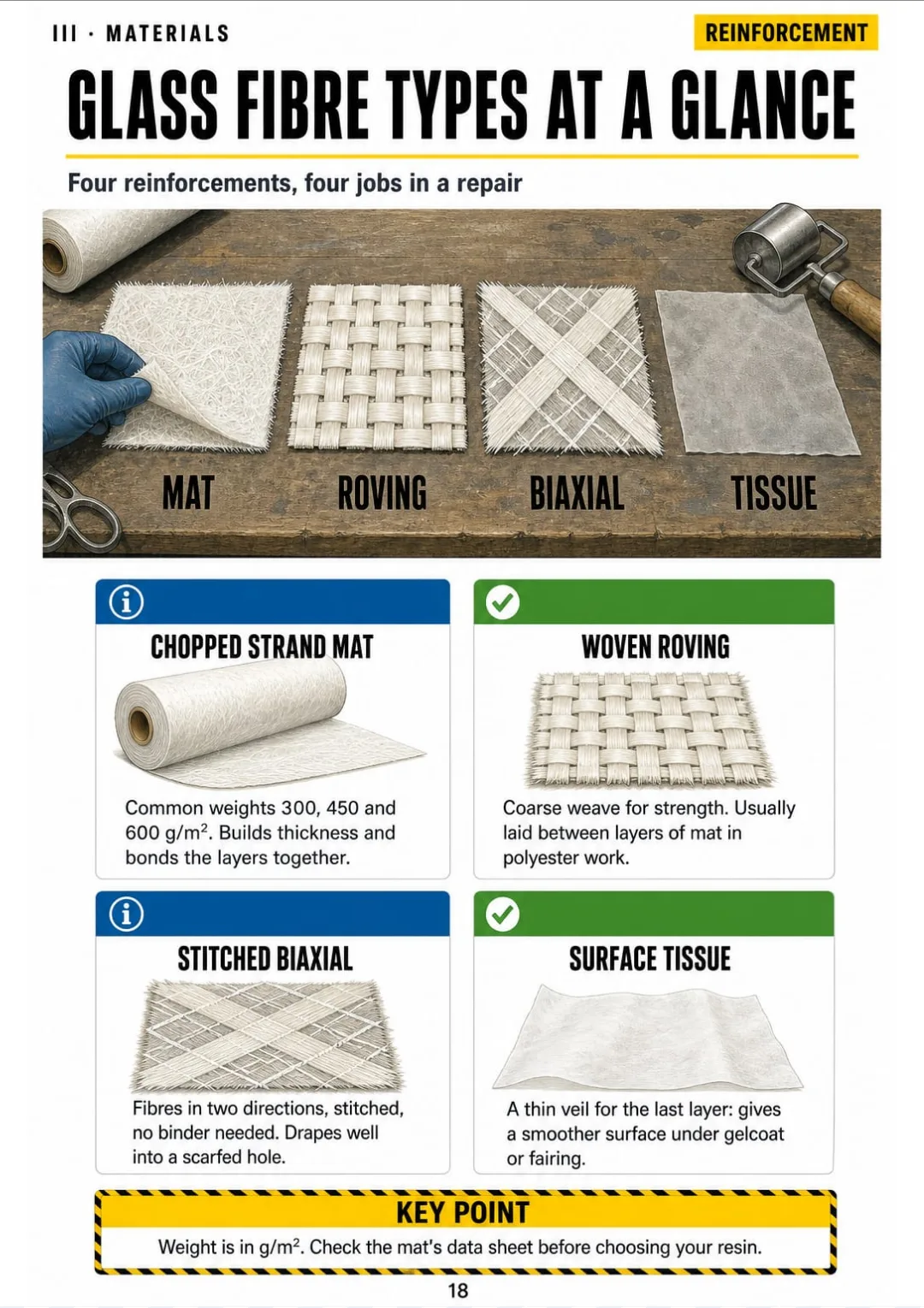
Chopped strand mat 300, 450, 600 g/m², woven roving, biaxial and tissue, side by side.
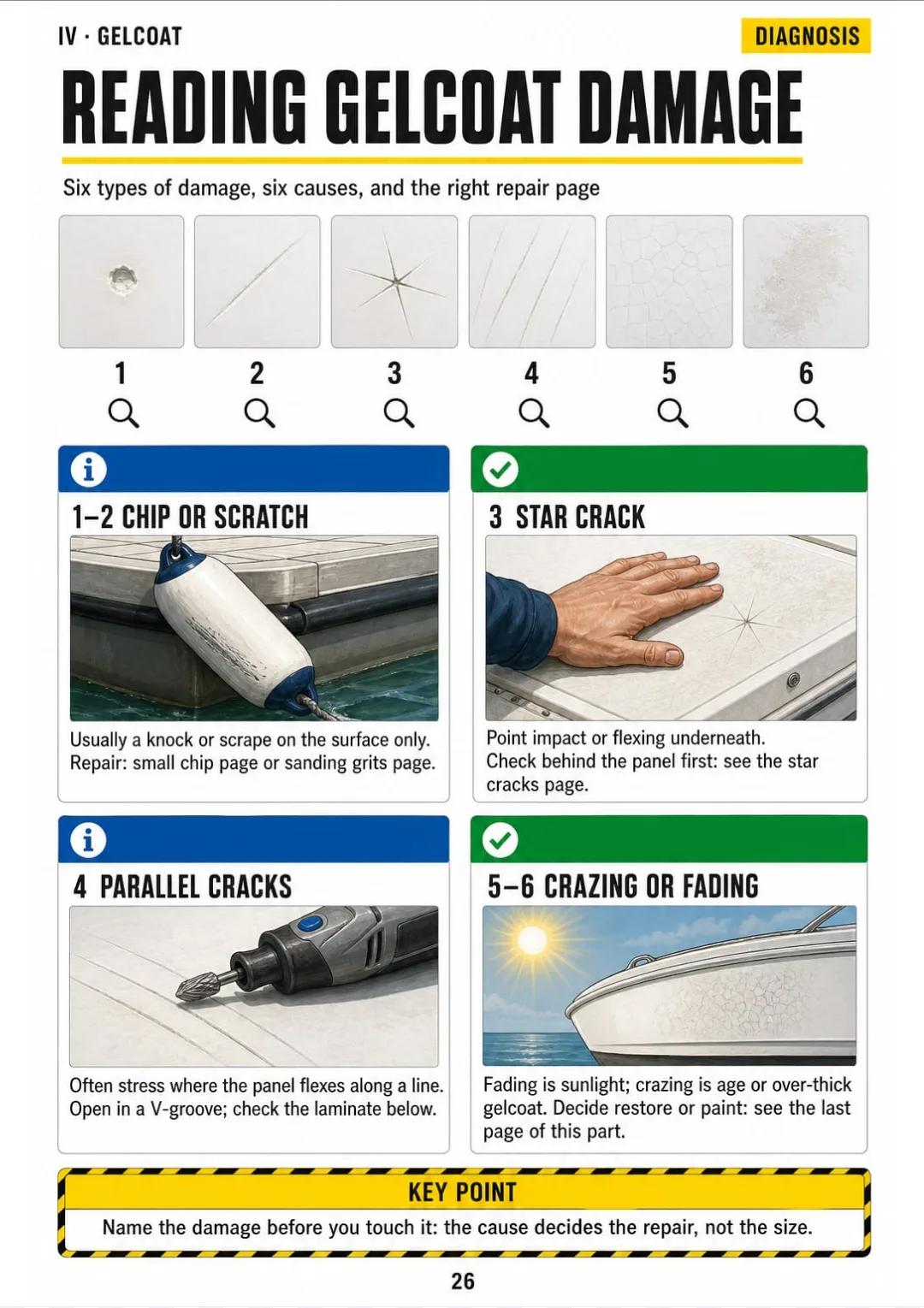
Chip, scratch, star crack, stress cracks, crazing, fading: cause and repair page for each.
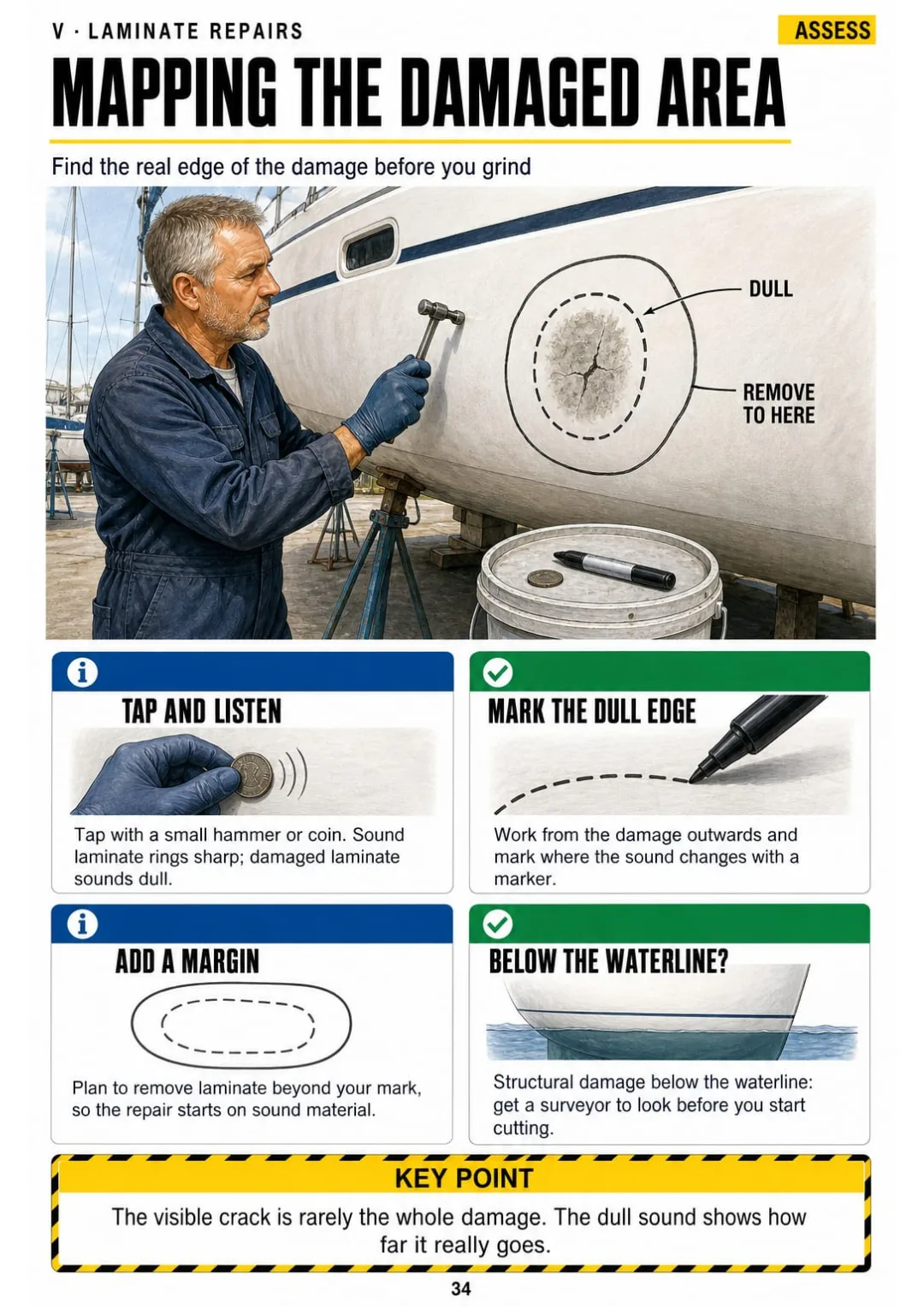
Tap-test, mark the dull edge, plan a margin beyond it: the damage is bigger than the crack.
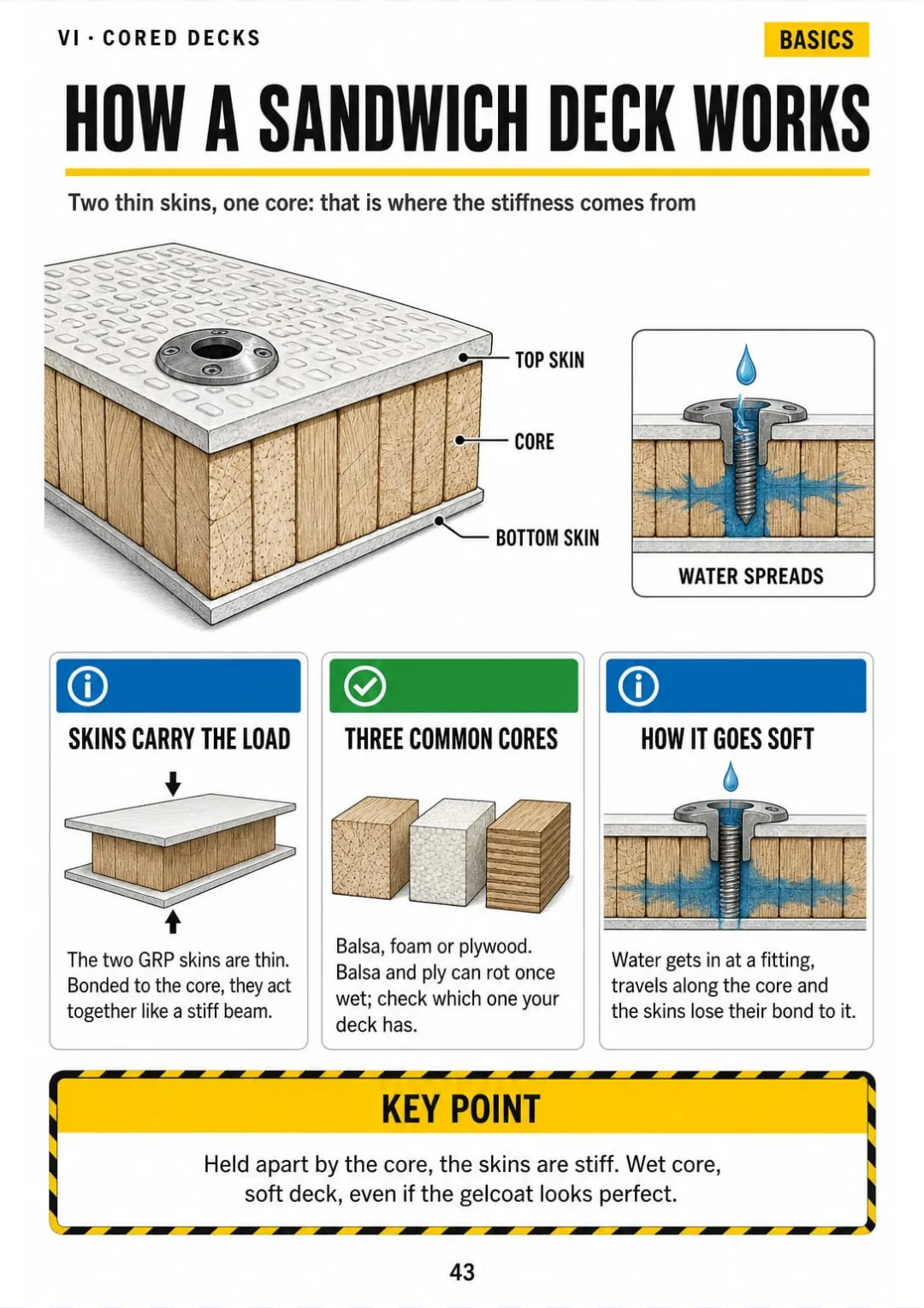
Top skin, core, bottom skin: why water in the core makes the deck soft
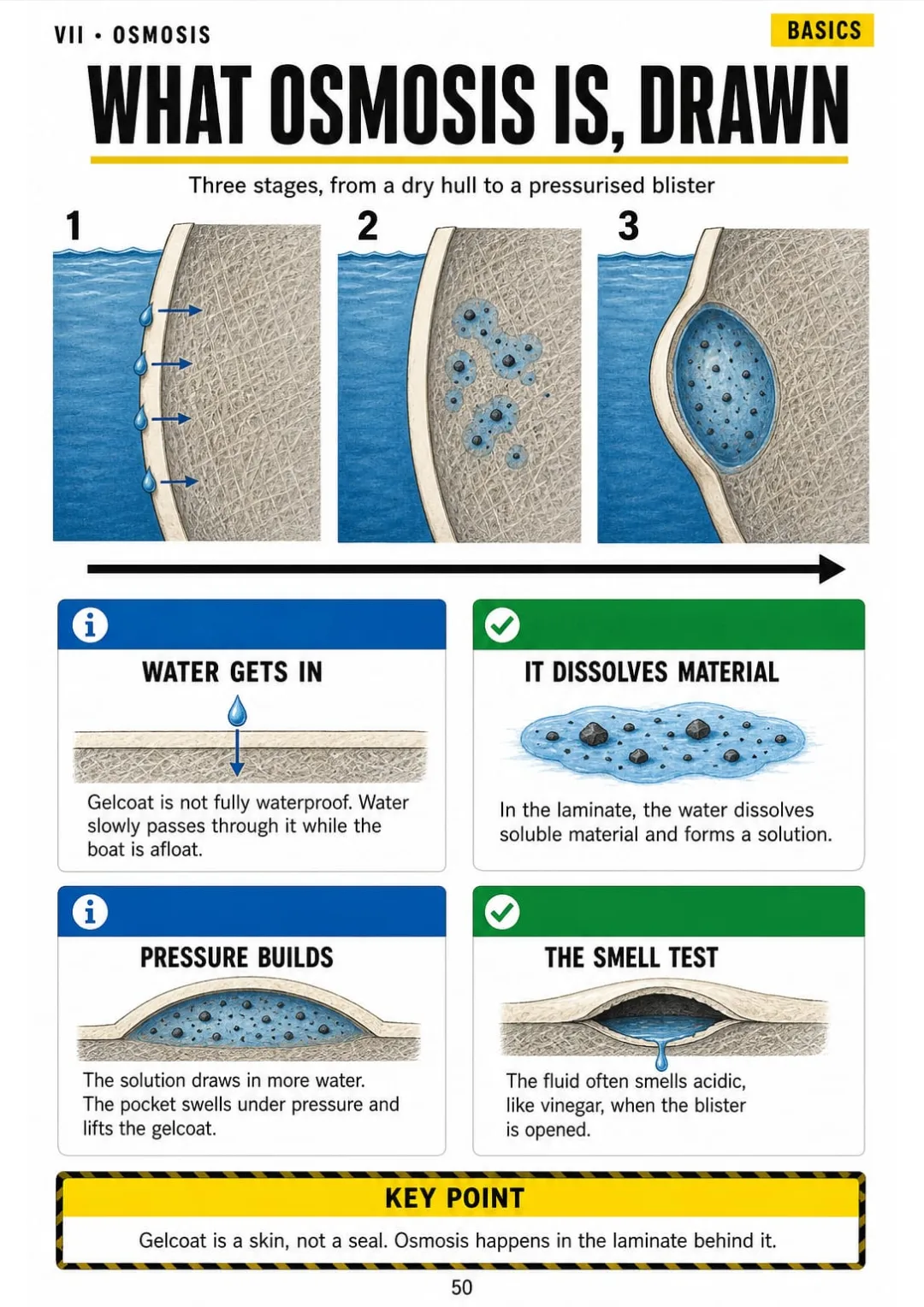
Osmosis in 3 stages: water through gelcoat, solution in laminate, blister under pressure
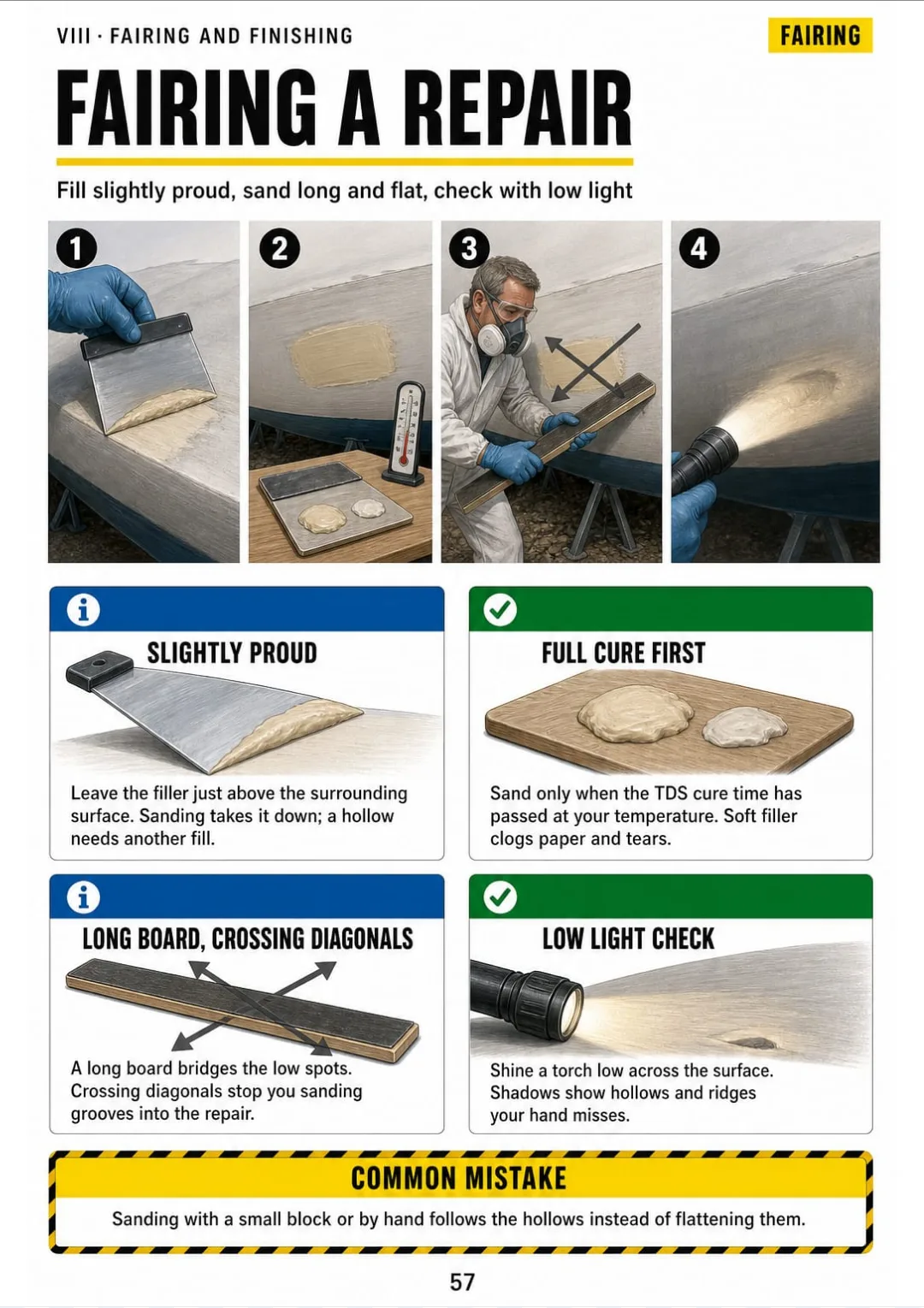
Fairing in 4 steps: proud filler, full cure, long board in crossing diagonals, low torch check

Swipe to see more →

These are real pages from the book. The table of contents is the full one: 9 parts and 62 topics.

The Problem Isn't You. It's How It Was Explained.

You're at the chandlery counter to buy glass for a patch, and the shelf says chopped strand mat 300, 450, 600, woven roving, biaxial, tissue. Which one goes on your boat?

The manual answers in three dense paragraphs about grams per square metre, binders and weaves. The assistant is waiting, and you still can't picture the difference.

Chopped strand mat 300, 450, 600 g/m², woven roving, biaxial and tissue, side by side.

In the book, the same fibres are drawn side by side: mat, woven roving, biaxial and tissue, each with its weight in g/m², so you can see the difference.

The rest of the job works the same way. Star cracks, scarfing, wet cores, osmosis blisters and fairing each have their own page.

You pick the right roll, cut your layers and lay up the patch without going back to the manual.

COMPARE FOR YOURSELF

Same Topic, Two Ways to Learn It

THIS
  • Ten videos, ten different answers
  • Safety rules explained only in words
  • You start the job still unsure
A cored deck laminate comprises an outer and an inner fibre-reinforced skin bonded either side of a low-density core, typically end-grain balsa or closed-cell foam, such that where the bedding of a deck fitting deteriorates, water may migrate along the fastener bore into the core where, in the case of balsa, it can progressively degrade both the material and the skin-to-core bond, producing a loss of stiffness that frequently extends well beyond the visibly affected area and may only be established through percussion testing, moisture readings and exploratory test holes.
FOR THIS
  • The deck drawn in section: skin, core, skin, and the water getting in
  • The steps in a single box
  • You see it and you get it
COSHH order of control: remove the hazard, extract at source, PPE last
CONTENTS

Take a Look at the 9 Parts and 62 Topics

Your hull, safety on the hard, materials and mixing, gelcoat, laminate, cored decks and fittings, osmosis, fairing and antifouling, and the checks before relaunch: 66 pages, all illustrated

IKnow Your Hull · pp. 5-11
  1. Your hull in cross-section
  2. Solid hull or cored sandwich?
  3. Polyester, vinylester or epoxy?
  4. Gelcoat is a skin, not strength
  5. Structural or cosmetic: the first question
  6. The repair order, always the same
  7. When it is a job for a surveyor or a yard
IISafety and Set-Up on the Hard · pp. 12-17
  1. What COSHH means at the boatyard
  2. Your protective kit, drawn
  3. Catalyst handling: MEKP rules
  4. Weather, temperature and dew point
  5. Setting up a tent and work station
  6. Waste resin, rags and dust
IIIMaterials and Mixing · pp. 18-25
  1. Glass fibre types at a glance
  2. Mat binder: why epoxy needs the right mat
  3. Mixing polyester: the catalyst percentage
  4. Mixing epoxy: the ratio is fixed
  5. Pot life and working time
  6. Fillers and thickeners
  7. Gelcoat versus flowcoat
  8. Amine blush and peel ply
IVGelcoat Repairs · pp. 26-33
  1. Reading gelcoat damage
  2. Fixing a small chip
  3. Star cracks: why they come back
  4. Opening a crack in a V-groove
  5. Matching gelcoat colour
  6. Sanding grits for gelcoat
  7. Spraying gelcoat on a larger area
  8. Crazing and fading: restore or paint
VLaminate Repairs · pp. 34-42
  1. Mapping the damaged area
  2. Scarfing: the bevel rule
  3. Grinding without going too deep
  4. Cutting the patch layers
  5. Wetting out and rolling
  6. How many layers per session
  7. Repairing a hole: backing plate
  8. Repairing from one side only
  9. Checking the cure
VICored Decks and Fittings · pp. 43-49
  1. How a sandwich deck works
  2. Finding a wet or soft core
  3. Drilling test holes
  4. Small wet area: dry and inject
  5. Replacing core from above
  6. Fixing holes through a cored deck
  7. Bedding a fitting properly
VIIBlisters and Osmosis · pp. 50-56
  1. What osmosis is, drawn
  2. A blister or something else?
  3. Counting and mapping blisters
  4. Local blister repair
  5. Drying out a hull
  6. Epoxy barrier coats
  7. When osmosis is a yard job
VIIIFairing, Finishing and Antifouling · pp. 57-60
  1. Fairing a repair
  2. Primer and paint over a repair
  3. Antifouling over a repaired area
  4. Removing old antifouling safely
IXBefore Relaunch: Review and Checklists · pp. 61-66
  1. The repair order on one page
  2. Frequent mistakes in gelcoat repairs
  3. Frequent mistakes in laminate repairs
  4. Cold weather winter checklist
  5. Pre-relaunch hull check
  6. Your log for each repair

One Page, One Topic, All Clear

Think of it this way:

It's a Saturday in February, the boat's on stands, and you've just found a soft spot round a stanchion base. Is the core wet, and how far does it go?

You open the page on sandwich decks and see the top skin, the core and the bottom skin drawn in section, with the water getting in round the fitting.

Tap-test, mark the dull edge, plan a margin beyond it: the damage is bigger than the crack.

The same goes for gelcoat chips, star cracks, scarfing, osmosis blisters and fairing: each one on its own page.

GRP Boat Repair Illustrated is 9 parts and 62 topics, all drawn, ending with the repair order on one page, the frequent mistakes and your pre-relaunch checks.

What you see drawn, you don't have to memorize.

What's Inside GRP Boat Repair Illustrated:

Ipp. 5-11

Know Your Hull

Your hull in cross-section, solid or cored, polyester, vinylester or epoxy, why gelcoat is a skin, structural or cosmetic, the repair order and when it's a job for a surveyor or a yard.

IIpp. 12-17

Safety and Set-Up on the Hard

What COSHH means at the boatyard, your protective kit, handling MEKP catalyst, temperature and dew point, a tent and work station, and getting rid of waste resin, rags and dust.

IIIpp. 18-25

Materials and Mixing

Glass fibre types, the right mat for epoxy, catalyst percentage for polyester, fixed epoxy ratios, pot life, fillers, gelcoat versus flowcoat, amine blush and peel ply.

IVpp. 26-33

Gelcoat Repairs

Reading gelcoat damage, small chips, star cracks and why they come back, V-grooves, colour matching, sanding grits, spraying larger areas, crazing and fading.

Vpp. 34-42

Laminate Repairs

Mapping the damage, the scarf bevel, grinding to the right depth, cutting and wetting out layers, layers per session, holes with a backing plate or from one side, and checking the cure.

VIpp. 43-49

Cored Decks and Fittings

How a sandwich deck works, finding a wet or soft core, test holes, drying and injecting, replacing core from above, holes through cored decks and bedding fittings.

VIIpp. 50-56

Blisters and Osmosis

Osmosis drawn, blister or something else, mapping blisters, local repairs, drying a hull, epoxy barrier coats and when it's a yard job.

VIIIpp. 57-60

Fairing, Finishing and Antifouling

Fairing a repair, primer and paint, antifouling over a repaired area and removing old antifouling safely.

IXpp. 61-66

Before Relaunch: Review and Checklists

The repair order on one page, frequent gelcoat and laminate mistakes, the cold-weather winter checklist, the pre-relaunch hull check and your repair log.

At the end of the book: The repair order on one page, frequent mistakes, winter and pre-relaunch checklists and a log for each repair.

Plus: 2 Free Books

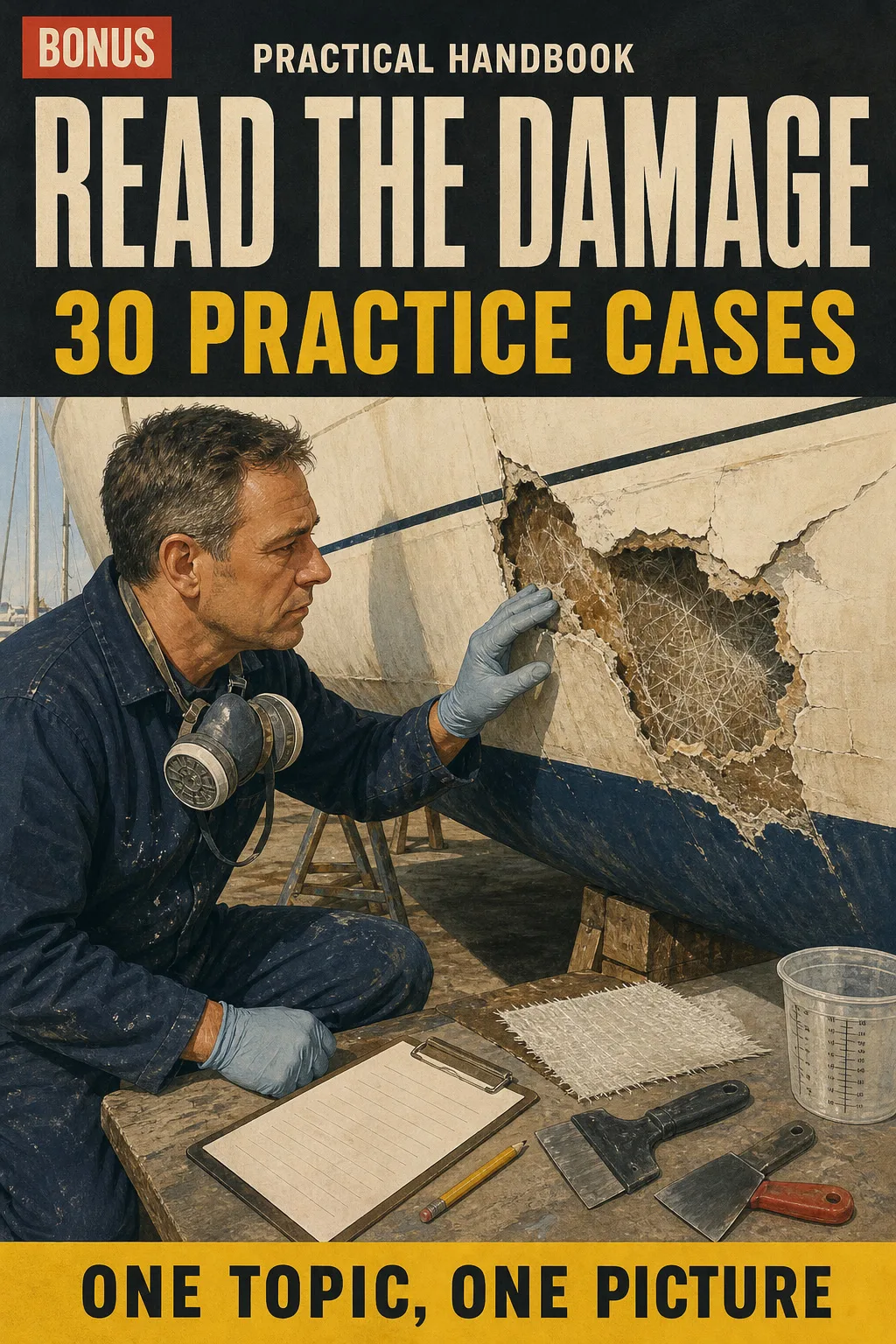
Read the Damage: 30 Practice Cases

BONUS 1: «Read the Damage: 30 Practice Cases»

Value on its own: US$ 17.90

Look at 30 drawn hull and deck defects, decide what each one is and which repair it needs, then check your answer, so you can tell a chip from a blister or delamination before you grind anything.

Workshop Cards: Mix, Cure, Sand

BONUS 2: «Workshop Cards: Mix, Cure, Sand»

Value on its own: US$ 14.90

Printable cards to keep by the boat: the repair order, resin mixing worked examples, working temperatures and sandpaper grades, so you have it all at a glance on the hard.

GRP Boat Repair Illustrated with 2 Free Books

  • GRP Boat Repair Illustrated: 66 illustrated pagesUS$ 63
  • BONUS 1: Read the Damage: 30 Practice CasesUS$ 17.90
  • BONUS 2: Workshop Cards: Mix, Cure, SandUS$ 14.90
  • High-resolution PDF to printIncluded
Total value US$ 95.80
YOUR PRICE:
US$ 27
You save US$ 68.80
YES, I WANT GRP BOAT REPAIR ILLUSTRATED FOR US$ 27

📄 This is a digital PDF book sent to your email: nothing is printed or shipped.

Secure purchaseEncrypted payment30-day guarantee

PDF by email: We email you GRP Boat Repair Illustrated as a PDF, together with the two free books. It's a single payment: no installments, no extra charges.

Who This Book Is For

You've just hauled out

You've just hauled out

Chips, cracks and a couple of blisters you hadn't seen in the water. The book helps you read each one and decide whether it's your job or the yard's.

Relaunch is a few weeks away

Relaunch is a few weeks away

You need the repairs done in the right order and fully cured before spring. Every step is drawn, from preparing to fairing.

You've maintained your own boat for years

You've maintained your own boat for years

You know the jobs, but not always the why. Each page shows which layer you're working on and the figures to check against your product's data sheet.

Everything You Get Today

US$ 95.80US$ 27
YES, I WANT GRP BOAT REPAIR ILLUSTRATED FOR US$ 27

📄 This is a digital PDF book sent to your email: nothing is printed or shipped.

30DAYS
GUARANTEE

30-Day Guarantee

Try GRP Boat Repair Illustrated for 30 days, bonus books included.

We refund everything if the file won't open, if the book isn't what you see here, if you were charged twice or if the email doesn't arrive. Just email us.

You pay once. No subscriptions.

Frequently Asked Questions

Is it for me if I do my own maintenance but have never laid up a patch?

Yes. It starts with the layers of your hull and the order of every repair, and each step is drawn. It also tells you clearly when a job is one for a surveyor or a yard.

Where does the content come from?

Safety pages follow HSE guidance under COSHH. Every resin figure is a worked example in millilitres, minutes and °C, to be checked against your product's technical and safety data sheets.

Is this official material?

No. It's an independent illustrated guide. It isn't published or approved by the HSE or by any resin, gelcoat or paint manufacturer.

Does it replace a surveyor or a boatyard?

No. It helps you understand and carry out cosmetic and small laminate repairs, including a small wet area round a fitting. Structural damage, the keel and rudder, large areas of wet core and extensive osmosis need a surveyor or a yard, and the book shows you where that line is.

Does it work for my boat?

Yes, if it's a fibreglass (GRP) sailing boat or motor boat. The pages cover solid and cored hulls and decks, and the materials pages cover polyester, vinylester and epoxy. Wooden, steel and aluminium hulls aren't covered.

When and how does it arrive?

The book and the 2 free books arrive as PDFs by email, to the address you enter at checkout. It's a one-off payment, with no subscription.

I've watched plenty of videos. What does this add?

Order, and a drawing you can keep next to you. Each repair has its own page, always in the same sequence: read the damage, prepare, fill, fair, finish. You print the page and take it to the boat, instead of pausing a video with resin on your gloves.

Can I have it on paper?

Yes. The PDF prints well at home, so you can keep the pages you need by the boat.

How does the refund work?

You have 30 days. We refund everything if the file won't open, if the book isn't what you see on this page, if you were charged twice or if the email doesn't arrive: just email us.

Before You Close This Page

No more rereading forum threads that don't add up.

Every layer of your hull, drawn and clear.

You go down to the boat knowing where each repair starts.

Drawings make studying faster.

The book is right below.

One-time payment: US$ 27 · Guarantee: 30 days · PDF by email

YES, I WANT GRP BOAT REPAIR ILLUSTRATED FOR US$ 27

📄 This is a digital PDF book sent to your email: nothing is printed or shipped.